





Investment teams often need to understand how an event will impact markets before any signals show up in company-reported data.
Say a software company you cover misses on revenue, for example. On the earnings call, management calls the shortfall a matter of deal timing. Your financial model assumes those deals close on schedule, but now several large contracts expected to close this quarter have slipped into the next. You’re left with a decision: whether to hold your forecast or cut it, with months until the next reported data point.
Situations like this are common, and the answer you need usually sits with the buyers whose deals slipped. Some may have pushed a signature back by a quarter. Others may have trimmed the order, moved the budget to another project, or walked away. Management’s explanation can’t tell you which, and neither can data reported so far. Asking the buyers can.
Earnings surprises, pricing changes, regulatory decisions, product launches, competitor moves, and macro developments can suddenly require an analyst to reframe their questions. Catalyst-driven research is designed around a single, specific event, capturing rapid reactions from customers, distributors, partners, and other actors in the market while the event is still relevant. It helps you determine what changed, and whether the event may affect the assumptions behind your investment thesis.
Catalyst-driven research is rapid primary research conducted after a specific company, industry, regulatory, or macro event to understand how relevant market participants are reacting and whether the event may alter underlying business conditions. It’s also commonly referred to as event impact research or post-event analysis.
Three standard terms the space uses:
- Catalyst or event: the trigger for the research
- Rapid research: the workflow used to investigate the event quickly
- Flash survey: one possible quantitative method within that workflow
Four kinds of event tend to spur this type of research:
- Company events, such as earnings surprises and pricing changes
- Competitive events, such as a rival’s launch or a major contract loss
- Regulatory events, such as approvals or reimbursement decisions
- Market events, such as rate moves or supply disruption
The research question should be built around the event. Forcing an event into a generic survey template produces generic answers, so design should begin with what the changes the event may have triggered.
Is the event a short-term reaction, or does it reveal a potential shift that would affect an assumption underpinning your investment thesis? Event impact measurement should provide an answer to this initial question.
Take the example from earlier, where a revenue miss is attributed to deal timing. Rapid research can test that explanation directly by asking:
- Did customers defer those purchases, or cancel them?
- Has budget been reallocated to something else?
- Have procurement cycles lengthened, or is this just one quarter?
- Did channel partners see the same pattern in their own pipelines?
Expectations matter as much as behavior. The participants closest to the event may read its impact as temporary or structural, and that judgment should shape how far you revise your view. A buyer who calls a delay a one-quarter pause versus a buyer who describes a new budget regime point to different conclusions. If the event also reopens questions about future customer demand, assess forward-looking demand signals, too.
An immediate result should offer a signal to interpret alongside other evidence, rather than proof of future financial performance. Where an early signal needs watching rather than resolving, track whether the shift persists over time.
The right method depends on whether you need to size the reaction or understand its driving forces.
Speed has limits, which are worth weighing before you commission anything:
- Speed has a cost. A fast read reaches fewer people than a more in-depth study. Rapid fielding suits sizing a reaction and testing a specific explanation; it does not replace a full market study.
- Some events have no addressable population. When an event affects a handful of buyers, or the people who know cannot answer questions, a rapid survey is the wrong instrument.
- First reactions aren’t always legible or useful. Respondents a week after an event may not yet know how they will behave. If the answer needs watching over time, plan follow-up waves.
GLG supports rapid research with fast mobilization, screened respondents, and output built to dovetail into the analyst’s next step. On the fielding side:
- Rapid mobilization. GLG Surveys can field within hours of a market-moving event, using event-ready templates rather than a build-from-scratch cycle.
- On-demand activation. Outreach goes to high-availability, vetted groups primed for breaking-news feedback, so fielding is not gated on recruitment.
- Compliant fielding under time pressure. Research with customers, distributors, and partners operates under GLG’s compliance framework, and moving quickly does not change that.
On the output side, results are built for the portfolio manager conversation:
- Model-ready output. Raw and aggregated data are formatted for direct integration into financial models, with copy-and-paste charts.
- Flash synthesis. An executive-level read arrives alongside the underlying data, so you can brief without rebuilding the story.
- Live access where the event warrants it. View responses as they land rather than waiting for a closed field period.
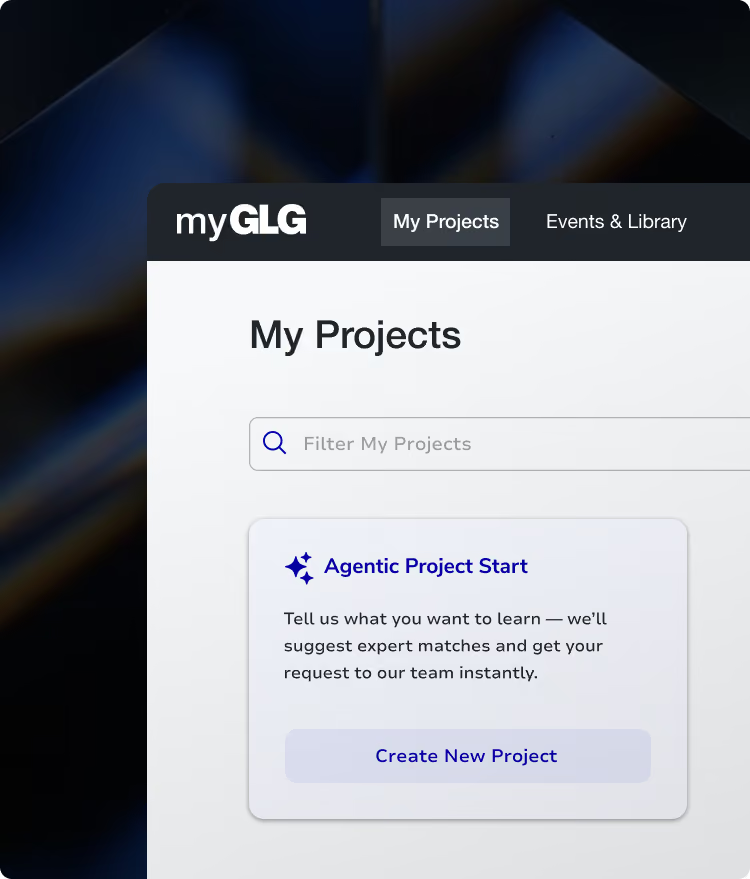
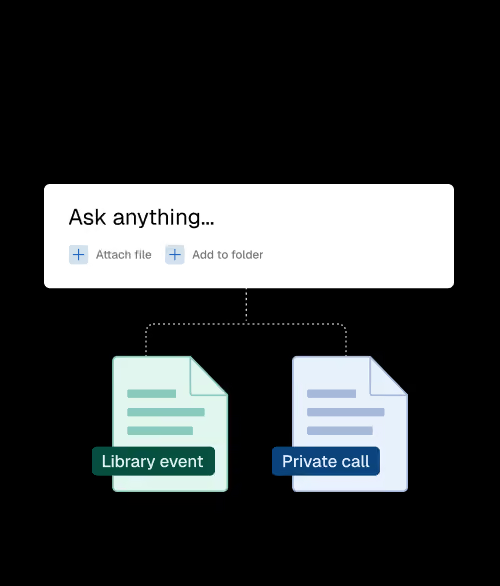
myGLG speeds up the work around these steps. Rapid project planning shortens the path from event to fielded research, and AI synthesis surfaces emerging themes across Expert Calls and AI-Moderated Calls, traceable to the underlying sources. Teams can find more on how GLG supports investment research on the Financial Services and Asset Managers pages.
The window in which a catalyst remains decision-relevant is short, and missing the moment can be costly.
Fill out the form below to speak with GLG’s Financial Services team about running rapid research on an event you’re watching.
Contact Us
Enter your contact information below and a member of our team will reach out to you shortly.