


.avif)

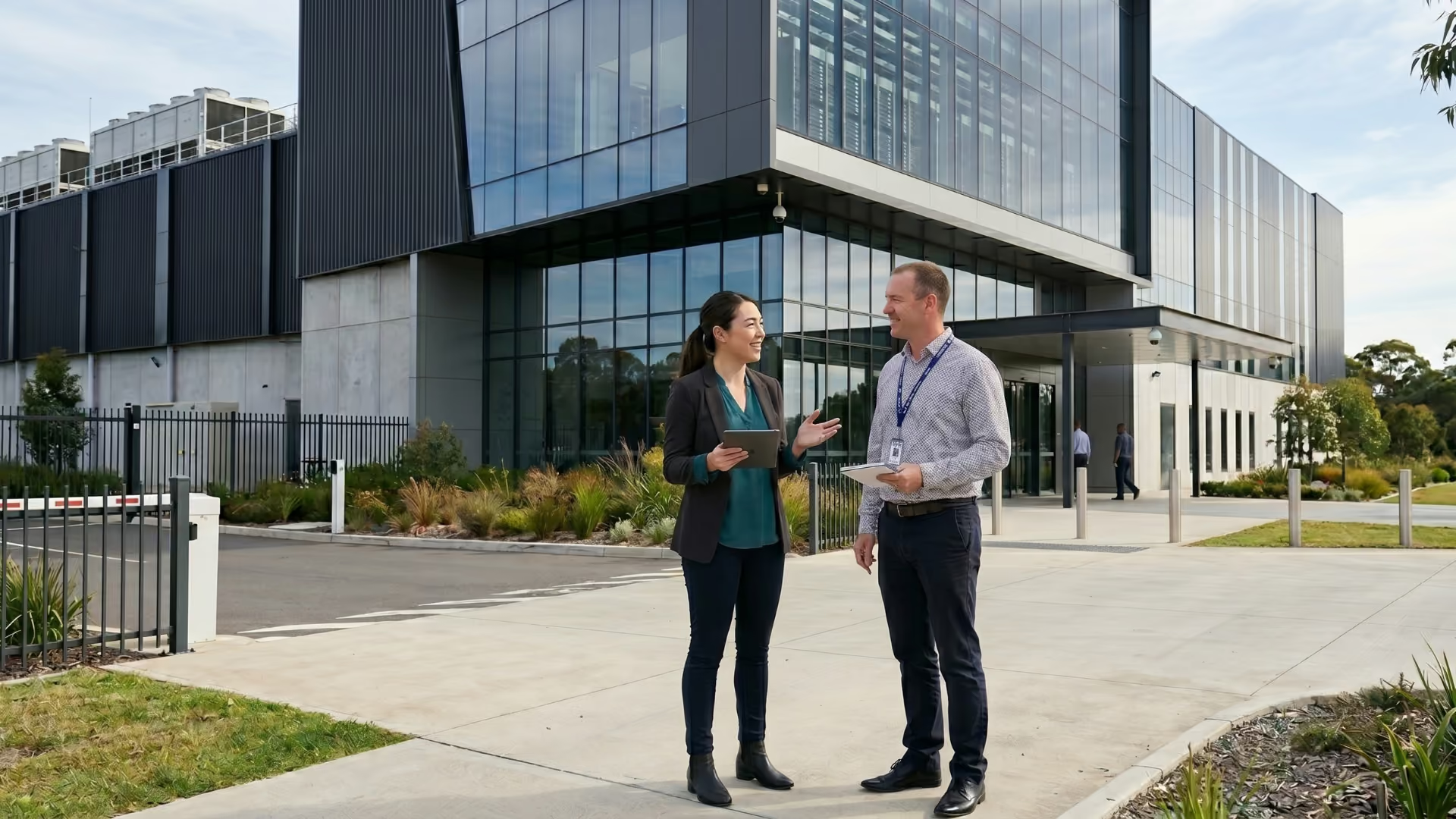
The data center market is entering a new phase of growth, driven by a combination of cloud adoption, digital transformation, and the rapid rise of artificial intelligence.
While demand for data centers has been building for over a decade, the pace of change today feels different. What was once a steady infrastructure buildout is now accelerating, with new technologies reshaping how data centers are designed, powered, and operated.
What are primary data center market growth drivers?
At its core, the growth of the data center market is tied to how businesses and consumers use technology.
More services are moving online, more data is being generated, and more applications require real-time processing. This has steadily increased the need for reliable, always-on infrastructure.
Cloud computing played a major role in this shift. It allowed companies to scale without owning physical infrastructure, which in turn fueled demand for larger and more efficient data centers. Now, a new layer is being added on top of this foundation.
The Surge in AI Data Center Demand
The rise of ai data center demand is one of the biggest structural changes in the industry today. Traditional workloads were relatively predictable in terms of power and performance requirements. AI workloads are not.
How do AI workloads differ from traditional cloud computing?
AI workloads demand significantly higher compute density, faster processing speeds, and much more power per rack. Typical power rack density was around 10 kilowatts (kW) per rack, but with AI that rack density has become around 100-150 kW per rack today, and GPU-based AI workloads don't just consume more power—they consume it in massive bursts for fractions of a second. This causes micro-surges that can trip Uninterruptible Power Supply (UPS) systems and grid connections.
How are data center operators designing new facilities to be flexible enough to handle both legacy cloud and future AI demand?
This shift is already forcing operators to rethink how data centers are built. Facilities that were designed for earlier generations of workloads may not be able to support the intensity of AI without major upgrades. Operators may need to completely rethink and overhaul their power distribution architecture and cooling systems to cope with the extreme heat and energy loads. As a result, many new buildings are being designed with flexibility in mind, allowing them to support both traditional cloud workloads and future AI demand.
How do major players in the hyperscale data center market (AWS, Microsoft, and Google Cloud) influence data center deployment
A large part of this transformation is being driven by hyperscalers such as Amazon Web Services, Microsoft Azure, and Google Cloud. Hyperscale leasing from these companies is now responsible for around 80% of global data center demand.
Their scale allows them to influence not just how data centers are built, but also where they are located and how quickly they are deployed. In many cases, the hyperscale data center market is pushing the limits of infrastructure, whether in terms of power consumption, cooling requirements, or deployment timelines.
Their needs are effectively setting the direction for the broader data center market.
Why Colocation Data Centers Still Matter
Even as hyperscalers expand, colocation data centers remain an important part of the ecosystem, where they are utilized by diverse businesses, from small firms to large enterprises.
Why would an enterprise use a colocation facility instead of moving entirely to the public cloud?
Not every company has the scale or need to build its own infrastructure. Colocation providers offer a way to access high-quality facilities without the cost and complexity of building and operating them.
This model also gives businesses flexibility. They can scale up or down based on demand, while still maintaining control over their hardware.
In practice, many organizations are now using a mix of hyperscale cloud and colocation deployments, depending on their specific needs.
A Shift Toward Larger and More Complex Data Centers
The definition of a data center is also evolving.
Facilities are getting larger, often moving from standalone buildings to multi-site campuses. These campuses allow operators to scale capacity more efficiently while sharing key infrastructure such as power and connectivity.
At the same time, the complexity of these facilities is increasing. Designing and building a modern data center involves multiple layers, from physical infrastructure to network systems and operational processes.
This makes execution more challenging, especially as timelines are being compressed to meet growing demand.
Addressing Data Center Power Constraints
Data center power constraints are less visible, but are critical challenges facing the market today.
Data centers require a stable and significant supply of electricity. As demand grows, especially with the rise of the ai data center, securing enough power is becoming more difficult in certain regions.
This is influencing where new data centers are built and how they are designed. Operators are increasingly focused on efficiency, alternative energy sources, and long-term sustainability. Power is no longer just a cost factor. It is becoming a key driver of strategy.
The Bigger Picture
The data center market is no longer just about infrastructure. It sits at the intersection of cloud computing, AI development, and global connectivity.
What we are seeing now is not a temporary surge, but a structural shift. Demand is being driven by multiple forces at once, and each of them is reinforcing the need for more advanced and scalable data center solutions.
At the same time, the industry is facing new constraints, from data center power constraints to construction timelines. How these challenges are addressed will shape the next phase of growth.
Why This Matters for Businesses and Investors
For businesses, understanding how the data center market is evolving is becoming increasingly important. Decisions around cloud, infrastructure, and AI are all tied to how this ecosystem develops.
For investors, the space presents both opportunity and complexity. Growth is strong, but execution risks, cost pressures, and infrastructure constraints need to be carefully considered. Risk mitigation, in particular, is driving distinct cost premiums. For example, while most commercial facilities are built to Uptime Institute’s Tier 3 standards (concurrently maintainable), highly regulated users like financial institutions often demand Tier 4 (fault-tolerant) facilities. Investors modeling these developments must account for the fact that a Tier 4 facility is roughly 1.4 times more expensive to build than a Tier 3 facility.
The bottom line is simple: the role of the data center is expanding, and with it, the importance of getting infrastructure decisions right.
Where can I learn more and connect directly with data center experts?
If you want a deeper dive into how these trends are playing out across specific markets, operators, and infrastructure decisions, sign up here to watch the full expert discussion. Additionally, connecting directly with the practitioners who are actively designing, powering, and operating these complex facilities through a GLG expert call provides the nuanced, real-time data you cannot find in a public search.
If not, check out our other article: AI Data Center Infrastructure: Systems, Design, and Scaling Constraints
If you would like to speak 1-on-1 with data center operators, site-selection specialists, or infrastructure supply chain experts to unpack the nuances of the data center market, please contact us below.
NK Singh is a veteran industry leader with over 33 years of experience in the consulting, construction, and management of global data centers. A specialist in strategic design and operational excellence, he has held senior management roles for nearly two decades, delivering complex infrastructure projects across India and international markets.
This article is adapted from the GLG Roundtable “Building and Optimizing Data Centers in India,” hosted on February 26, 2026. Watch the full session replay to gain more of Mr. Singh’s insights into the evolving digital infrastructure landscape. If you would like to speak with experts like Mr. Singh, please contact us below .
Contact Us
Enter your contact information below and a member of our team will reach out to you shortly.